
How to read an analysis — Index (buy)
How to read the post · Index · BUY signal (uptrend)
How to read an index analysis
A Broad index analysis (S&P 500, Nasdaq, FTSE MIB…) has the same backbone as a stock post, but with some cards of its own and interleaved editorial prose. Here we go through them one by one.
Real example used throughout this guide: SPY (S&P 500, buy signal underway).
Before you start — everything you read are hypotheses and readings according to our model, not rules to follow. Every trader operates in full autonomy and assumes their own risk.
Section visible to everyone
Block 1
In Summary
The week's prose summary for the index.
Public
Real example — SPY
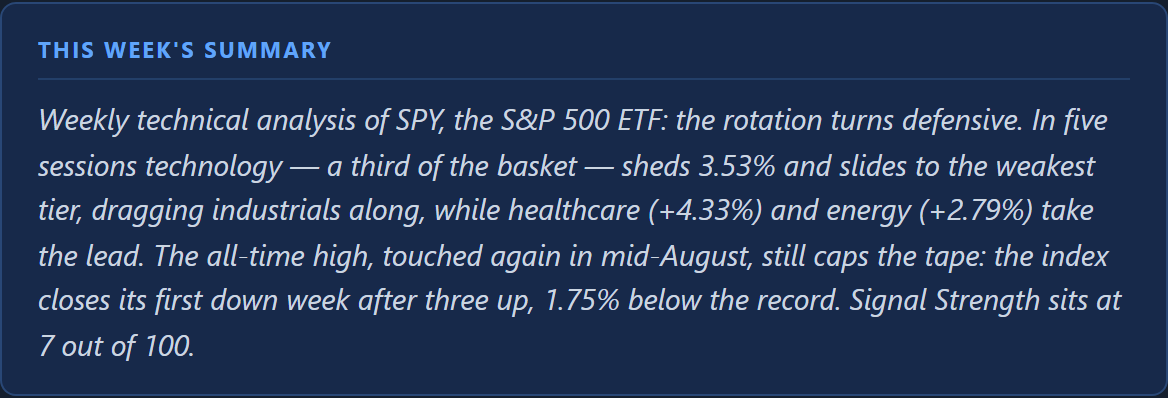
The starting point: signal status, what happened, the week's reading. On indices the analysis is more discursive — besides the cards you'll find editorial paragraphs accompanying it.
Block 2
Hero strip — the status row
The at-a-glance row at the top of the post.
Public
Real example — SPY

The signal status (e.g. "Open buy"), how many weeks it's been active and the category (Broad index). Colour green = uptrend scenario, red = downtrend.
Block 3
KPIs — the key numbers
The summary measures. On indices they differ from the stocks'.
Public
Real example — SPY
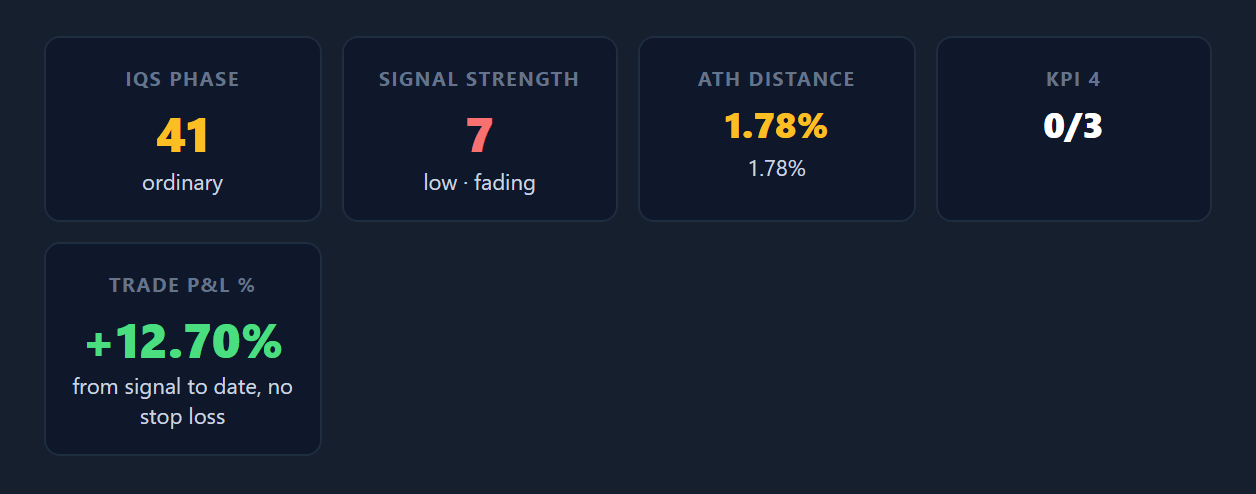
- IQS · Setup phase (0-100) — the phase relative to the volatility norm. Descriptive, not predictive.
- Signal Strength (0-100) — the intensity of the weekly signal.
- Distance from ATH — distance from the index's all-time high.
- A fourth value for context (here the profit-taking areas reached, "0/3").
- Trade P&L % — if the signal is already underway. It is calculated with no stop loss applied: the trade is left to run, meets its targets along the way and closes only when the signal reverses. Had you exited at one of the stop levels we flag, your own result would differ.
Difference from stocks — here there's no "Sizing" or "Ranking": indices aren't ranked like stocks.
Block 4
The chart
The index's weekly chart.
Public
Real example — SPY
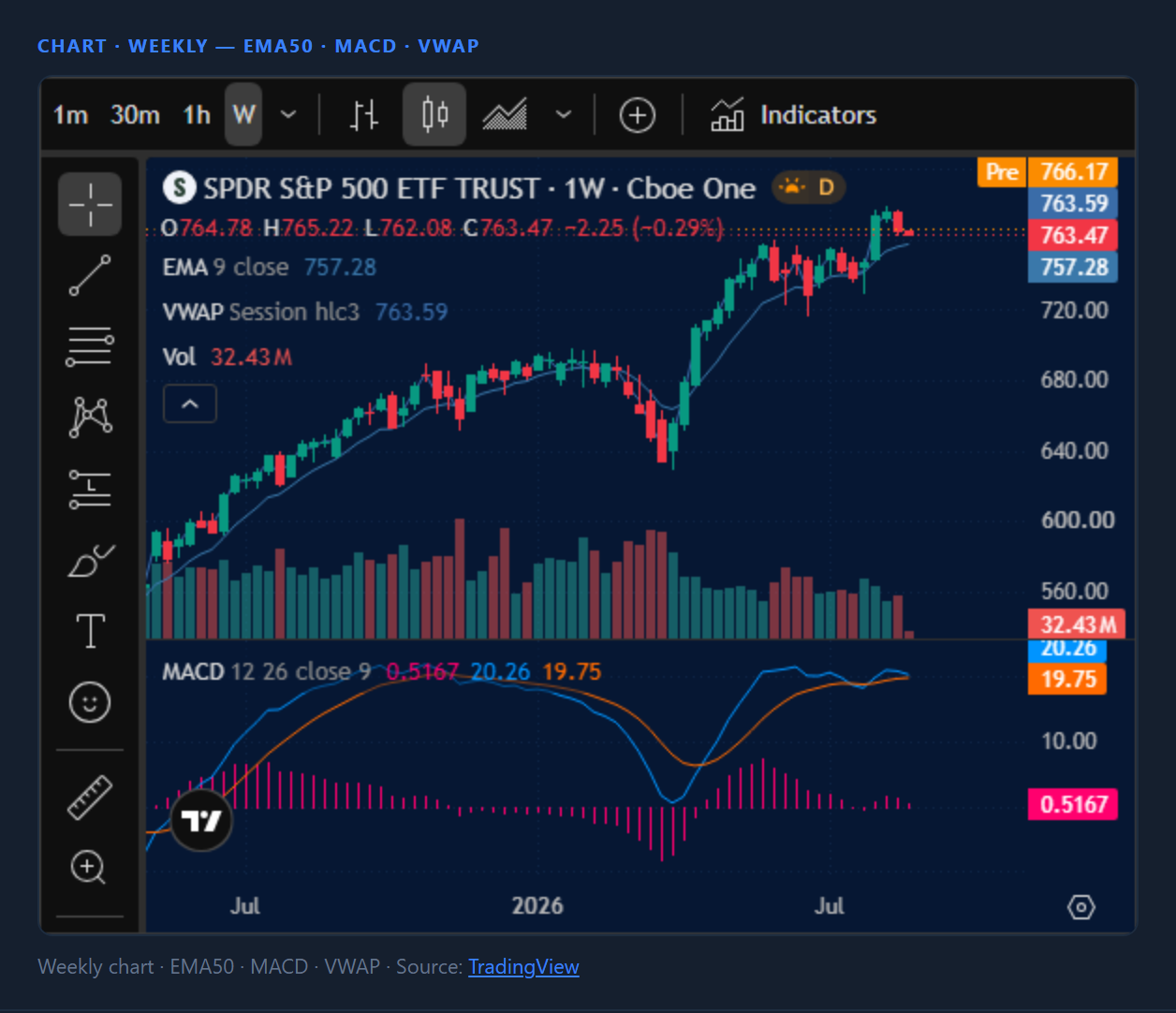
Weekly chart with 50-period moving average, MACD and VWAP — a TradingView widget (for some assets it might not be available). It's the last block visible to everyone: below you'll find the "How to read this page" link; from here on the analysis is reserved for Platinum.
Section reserved for Platinum clients
Block 5 · prose
Macro context and entry
The first editorial paragraph.
Indices only★ Platinum
Real example — SPY
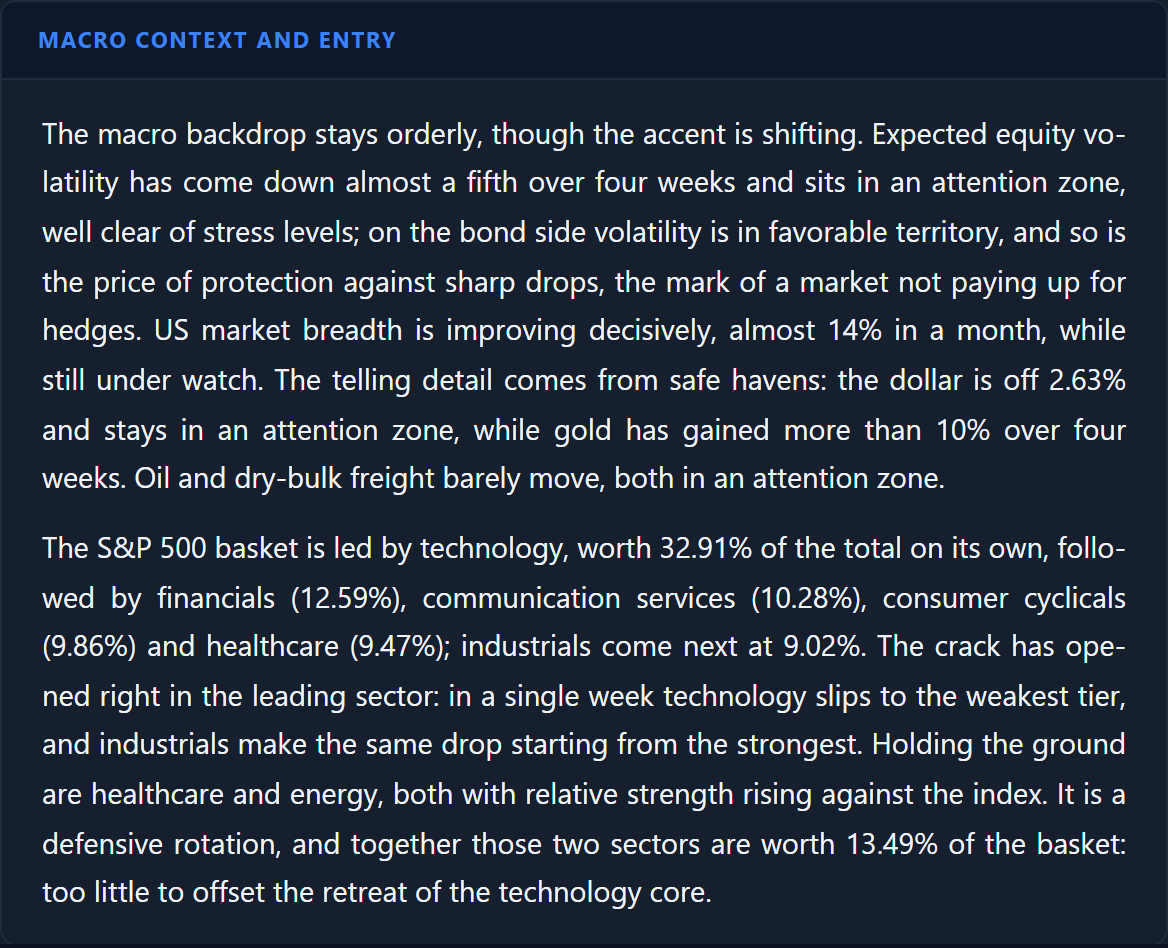
Unlike stocks, the index post alternates cards and prose. This first paragraph frames the macro context and the entry setup: it's the frame within which to read the numbers that follow.
Block 6
Macro hero
Four background indicators for the index.
Indices only★ Platinum
Real example — SPY
 1
2
3
4
1
2
3
4
1CD1D inverted
The structural condition of the index. On indices it reads the opposite of stocks: a "compressed" structure is often the best setup (not a defect).
2Confirmation week W+1
The outcome of the one-week confirmation check after the signal (bullish/bearish).
3Setup quality band
The setup grade at entry.
4Macro Regime
The background market regime (green/amber/red).
Block 7 · prose
Technical structure
The second editorial paragraph.
Indices only★ Platinum
Real example — SPY
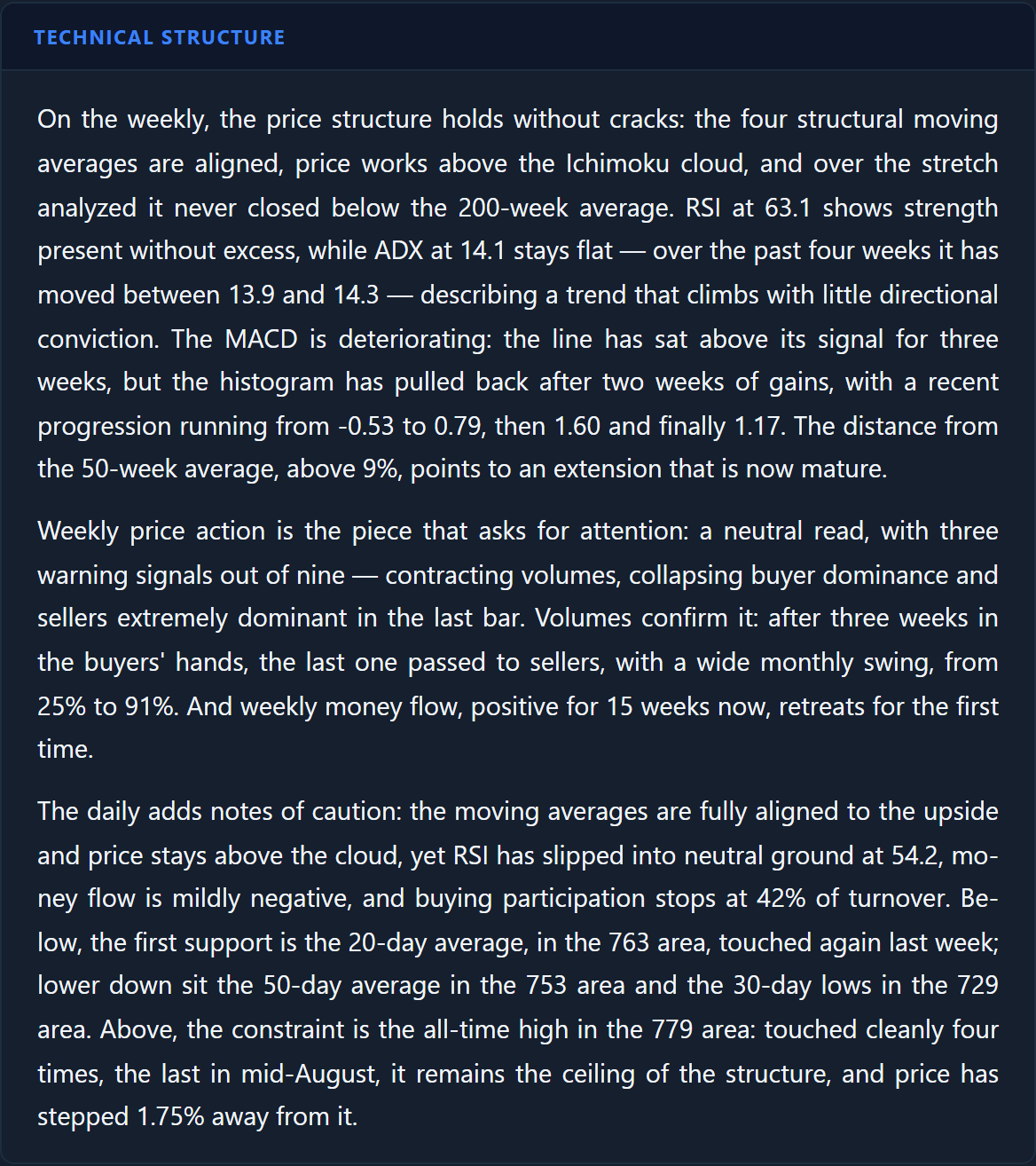
The account of the index's technical structure in the week — the "why" behind the numbers in the cards that follow.
When present — some indices also show here the Sector composition (sector weights) and, on sell signals, an Exit gate (see the downside index page). For SPY they don't appear this week.
Block 8
Price Action
The reading of the price over the last four weeks.
★ Platinum
Real example — SPY
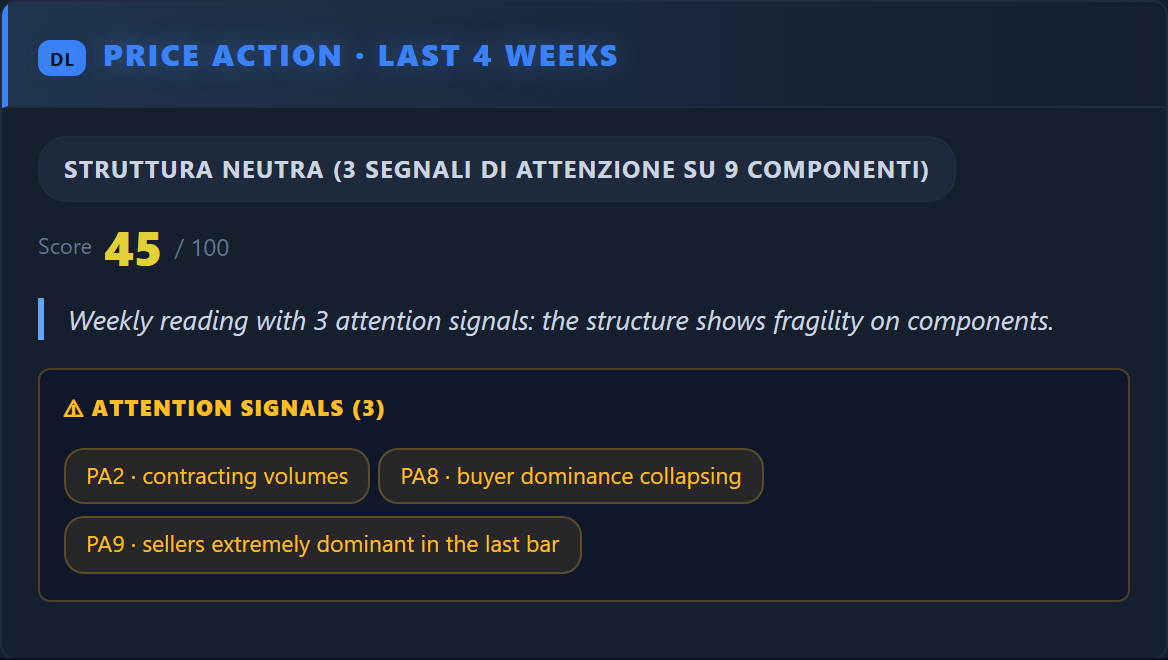
What the index price is doing over the last four weeks: direction, patterns, strength of the move (with a score) and warning signs.
Blocks 9-12
The proprietary indicators
Four measures from the model, one per card (as on stocks).
★ Platinum
IQS · Setup phase
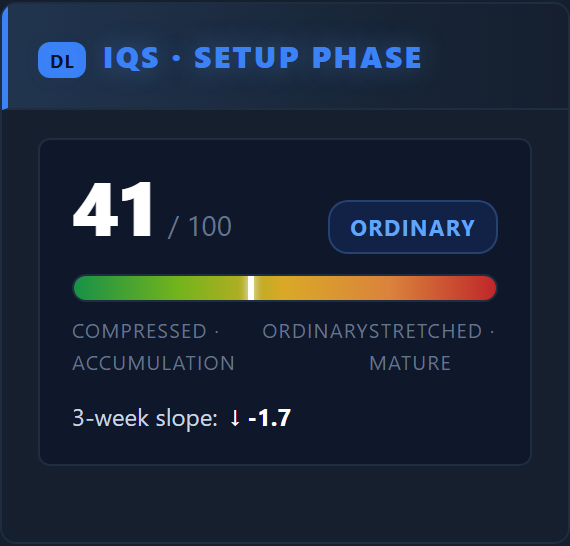
A phase descriptor of the setup (compressed → stretched/mature). Descriptive, not predictive.
Signal Strength
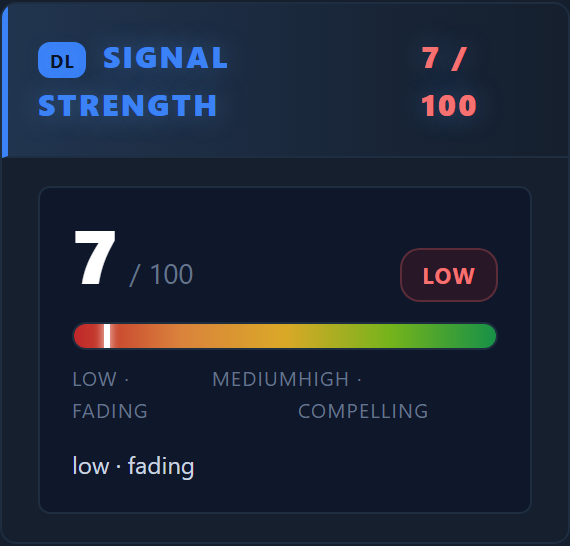
The intensity of the weekly signal (0-100); recomputed every week.
No-Trade Zone
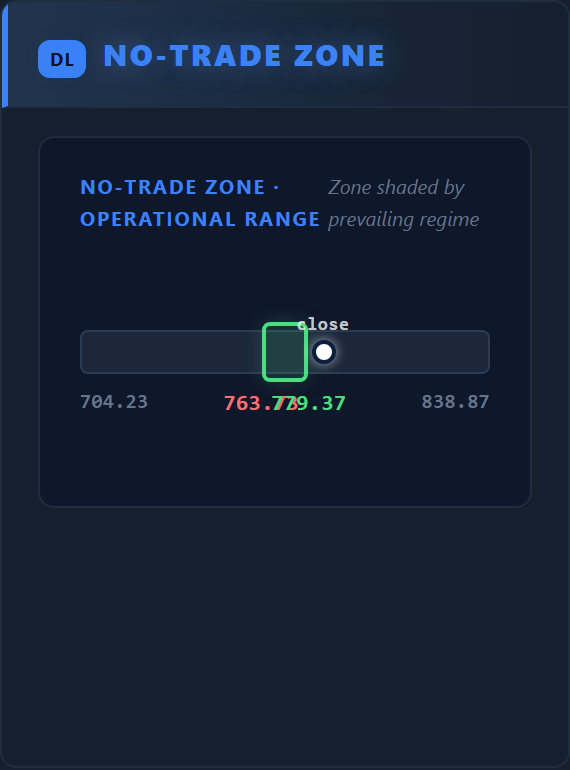
A band around the Inversion Point where entry is not operational. The dot indicates the side of the regime (not the price), without a value.
Distance from all-time highs
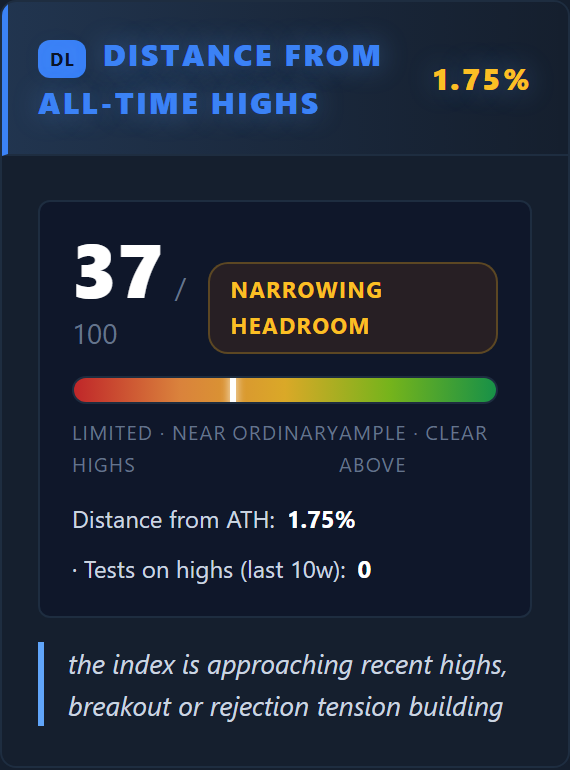
How much margin there is between the index and its all-time highs: wide = more room; narrow = close to the highs.
Support & Resistance
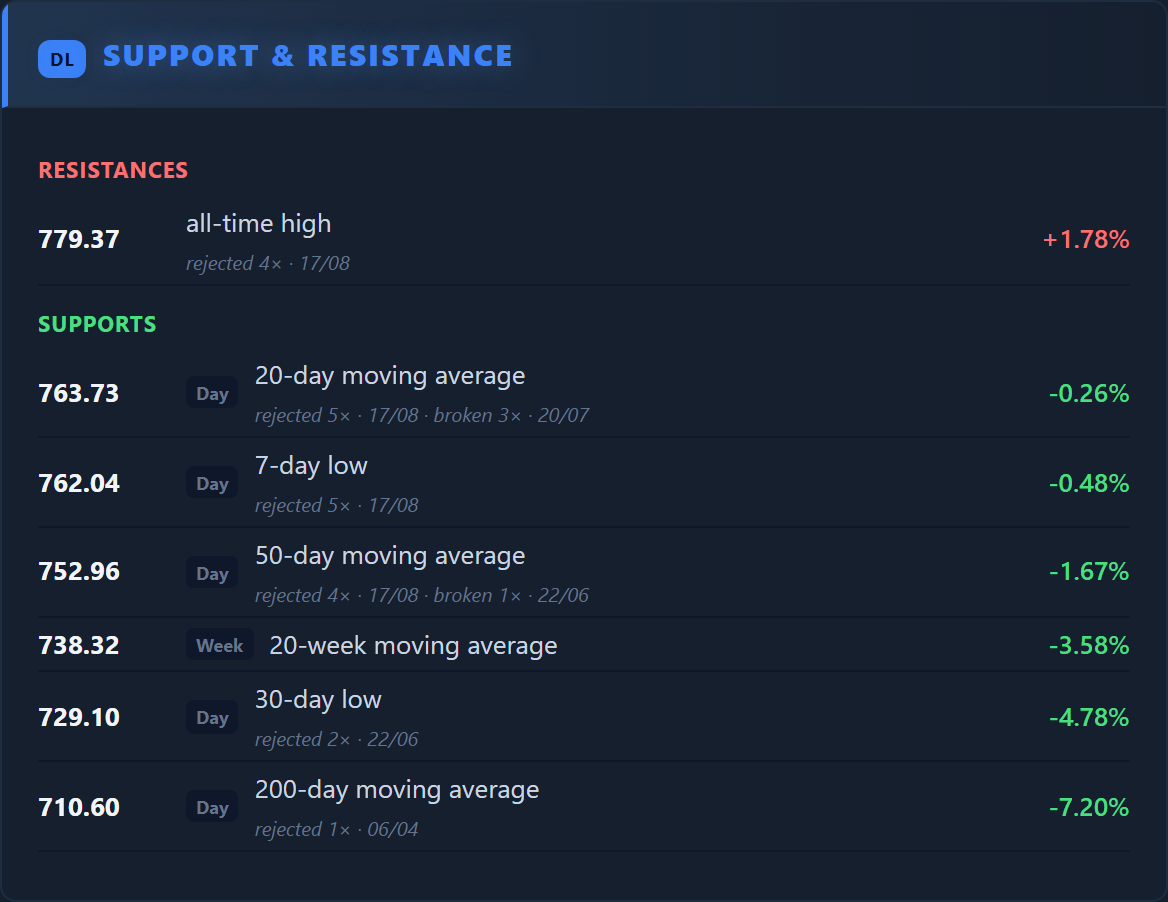
The levels the price meets above (resistances) and below (supports): for each one the price, the timeframe it comes from (Day or Week), what it is — a moving average, the Ichimoku cloud, an all-time high — and its distance from price. The «rejected N×» or «broken N×» note says how many times that level has been tested, and when last: a level rejected several times is sturdier than one never tested.
Block 13
Confirmation week
The check on the following week.
★ Platinum
Real example — SPY
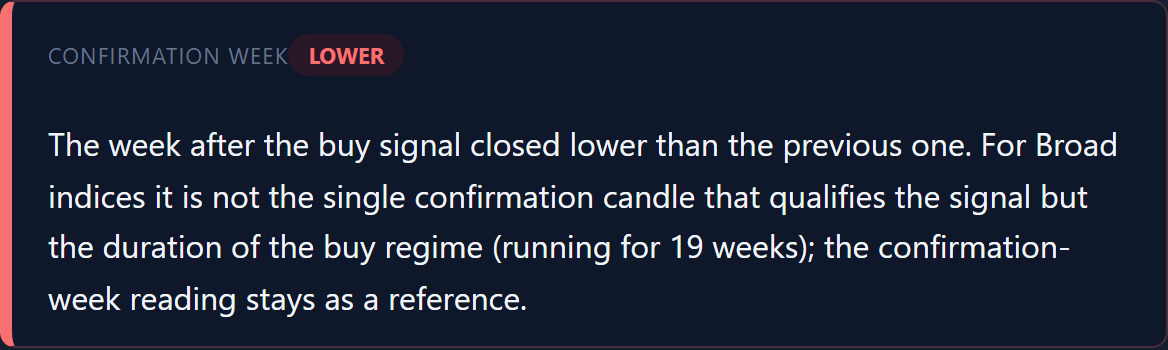
As on stocks, it checks the signal one week after it starts (confirmed or weakened). On indices it always appears.
Block 14 · prose
Operational plan and levels
The third editorial paragraph, which introduces the levels.
Indices only★ Platinum
Real example — SPY
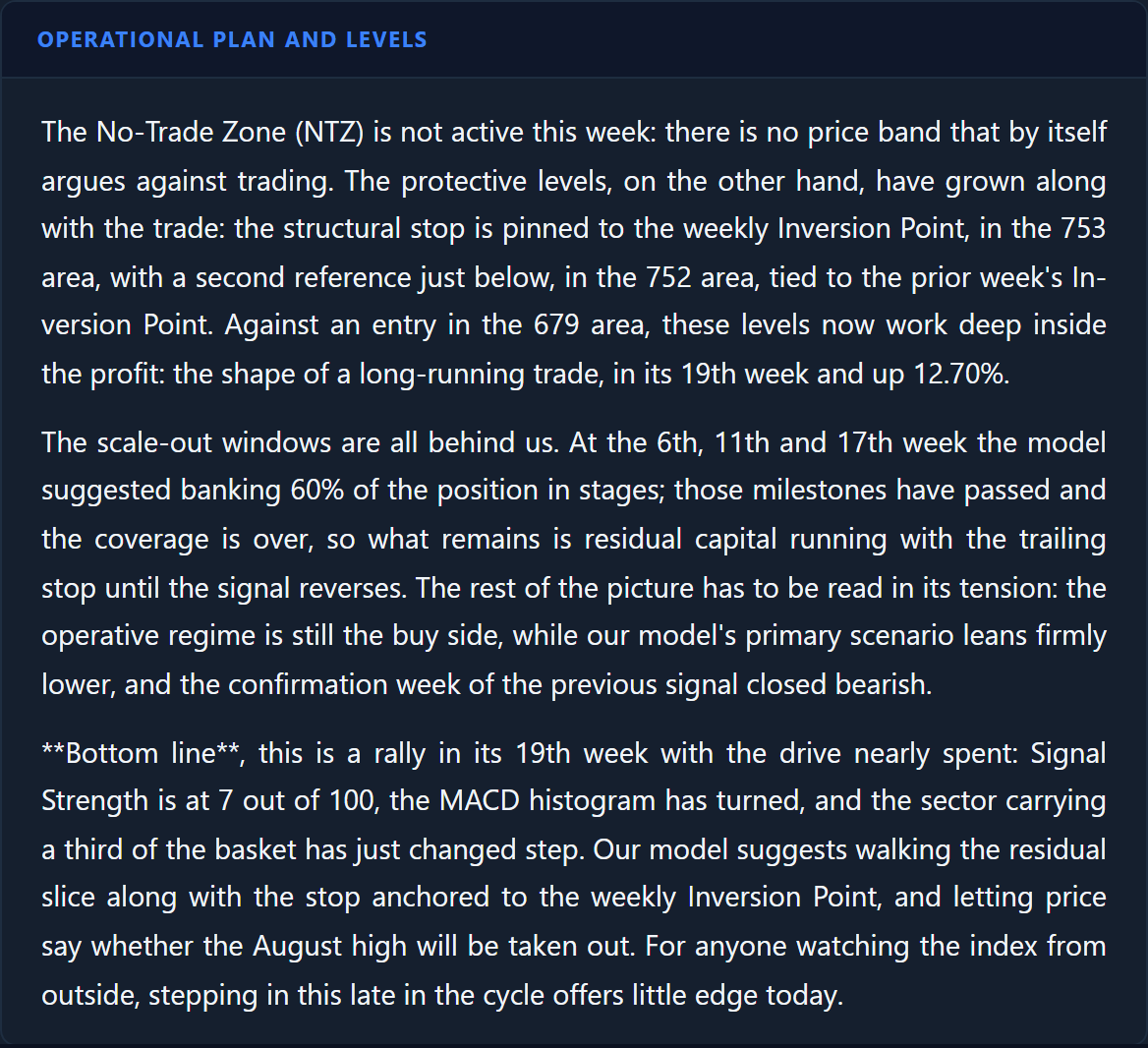
The account of the index's operational setup for the week, bridging toward the two final numeric cards (Areas and Levels). A working hypothesis, not instructions.
Block 15
Take-profit areas
Where the model hypothesises taking profit on the upside.
Indices only · LONG only★ Platinum
Real example — SPY
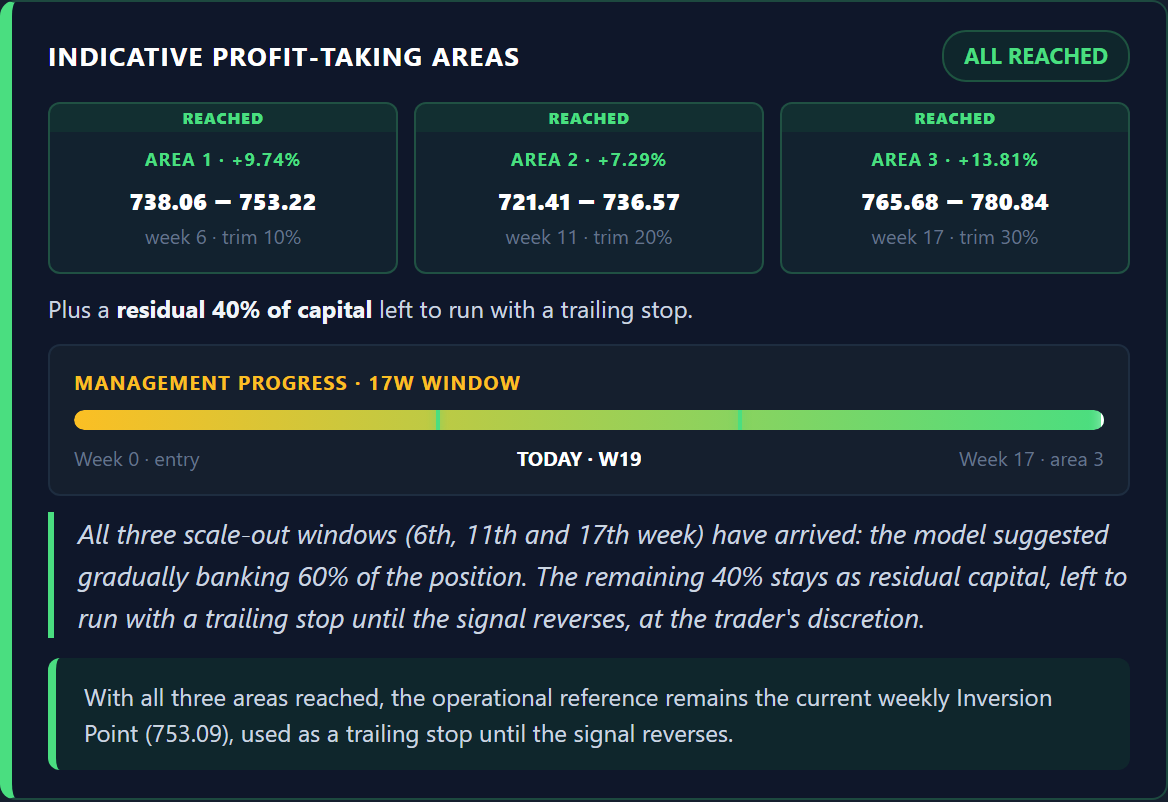 1
2
1
2
1The three areas
Three profit-taking areas at +X% on the entry, shown as bands (±ATR interval = the statistical uncertainty of the target) with the median expected time. "Reached" badge on the areas that are touched.
2The timeline
The progress of management over a 17-week window, with the TODAY point and the three median times. When all three are reached, the reference becomes the trailing stop on the Inversion Point.
On the upside only — on a falling index this card does not appear: the index model doesn't include profit-taking on the short side.
Block 16
Operational levels
The numeric grid: entry, protections, targets.
★ Platinum
Real example — SPY
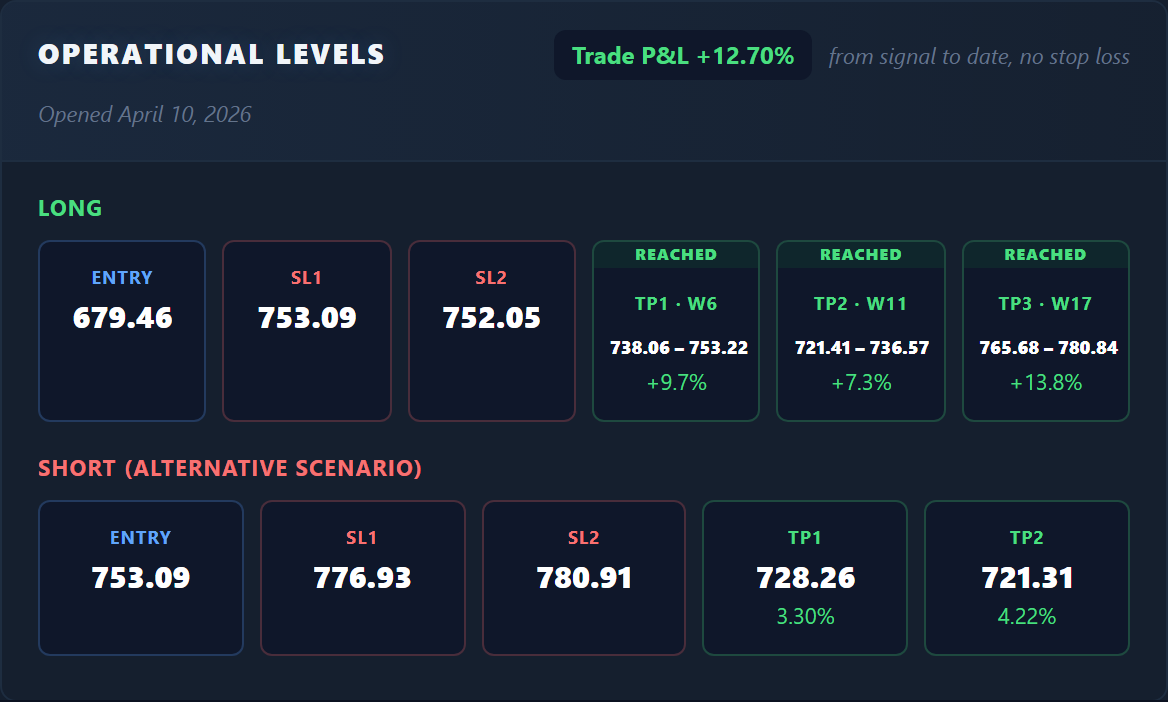
Entry, SL1/SL2 protection and the TPs. Difference from the "Areas" card: here the levels are hard values (the Areas use the ±ATR bands). Model levels, not orders to execute. Stops are options, not instructions: it is up to you whether to use one, which one, or none. If price closes the week beyond one of the stops flagged in the previous card we call it out in the summary and in the trading plan, along with the result anyone following that level would have taken (only weekly closes count, not an intraweek touch). The model itself does not close the trade: it keeps tracking the stock until the signal eventually reverses.
Block 17
Previous analyses
The history of the same index.
★ Platinum
Real example — SPY
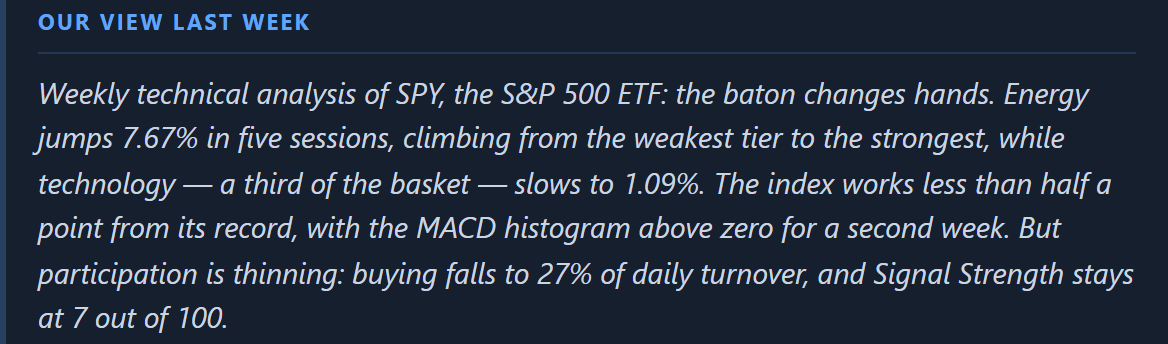
The links to previous analyses of the same index, to follow its thread over time.
Block 18
Legend
The glossary of terms, with the index-specific entries.
★ Platinum
Real example — SPY

It explains the page's terms (including the index-specific entries, such as the CD1D Inverted). Here you'll also find the "How to read this page" link.