
How to read an analysis — Stock (sell)
How to read the post · Stock · SELL signal (downtrend)
How to read a downside analysis
Same cards as the upside post, but read in reverse: the primary scenario is the decline. Here we go through them one by one — what each shows and how to read it in a SHORT key.
Real example used throughout this guide: A2A (sell signal, decline ongoing for 5 weeks).
Before you start — everything you read in the post are hypotheses and readings according to our model, not rules to follow. Every trader operates in full autonomy and assumes their own risk. The cards are there to help you understand, not to tell you what to do.
Section visible to everyone
Block 1
In Summary
The week's prose summary: state of the decline, what happened, the reading of the moment.
Public
Real example — A2A
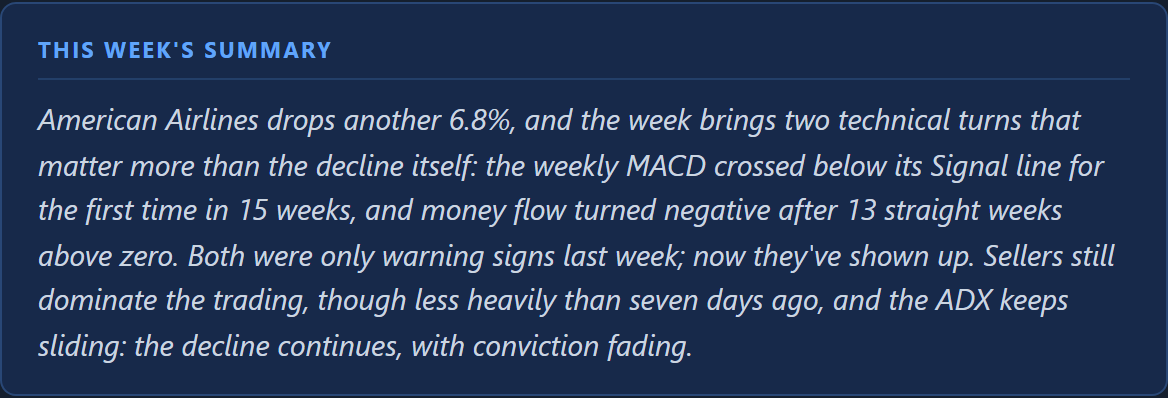
It's the starting point. On declines that have lasted several weeks it becomes a technical reading (volumes, MACD, CMF) versus the previous weeks, more than a new signal: it tells how the move is progressing.
Block 2
Hero strip — the status row
The at-a-glance row at the top of the post.
Public
Real example — A2A

From the left: the signal status (e.g. "Ongoing decline" / "Sell"), how many weeks it's been active, the category and the Tier. The compass is the colour: here it's red = downtrend scenario (on the upside it would be green).
Block 3
KPIs — the key numbers
The summary measures of the setup, read in a bearish key.
Public
Real example — A2A
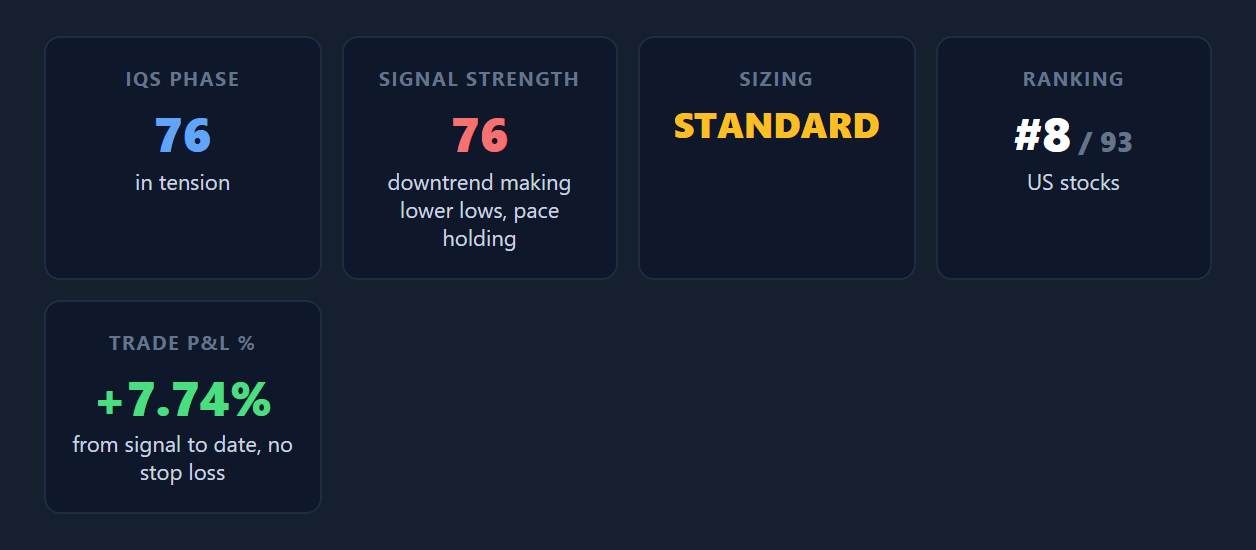
- IQS · Setup phase (0-100) — the phase relative to the volatility norm (compressed → stretched/mature). Descriptive, not predictive.
- Signal Strength (0-100) — on declines it reads the other way around: a high value = a very strong drop, which can indicate an already mature decline (possible exhaustion), no longer "strong".
- Sizing — the weight the model would suggest (minimum → full).
- Ranking — the position among stocks with the same signal (here: EU-UK sells).
- Trade P&L % — the change from the signal to today; on a decline, a falling price is a gain (here +7.55%). It is calculated with no stop loss applied: the trade is left to run, meets its targets along the way and closes only when the signal reverses. Had you exited at one of the stop levels we flag, your own result would differ.
Block 4
The chart
The weekly chart to frame the price structure at a glance.
Public
Real example — A2A
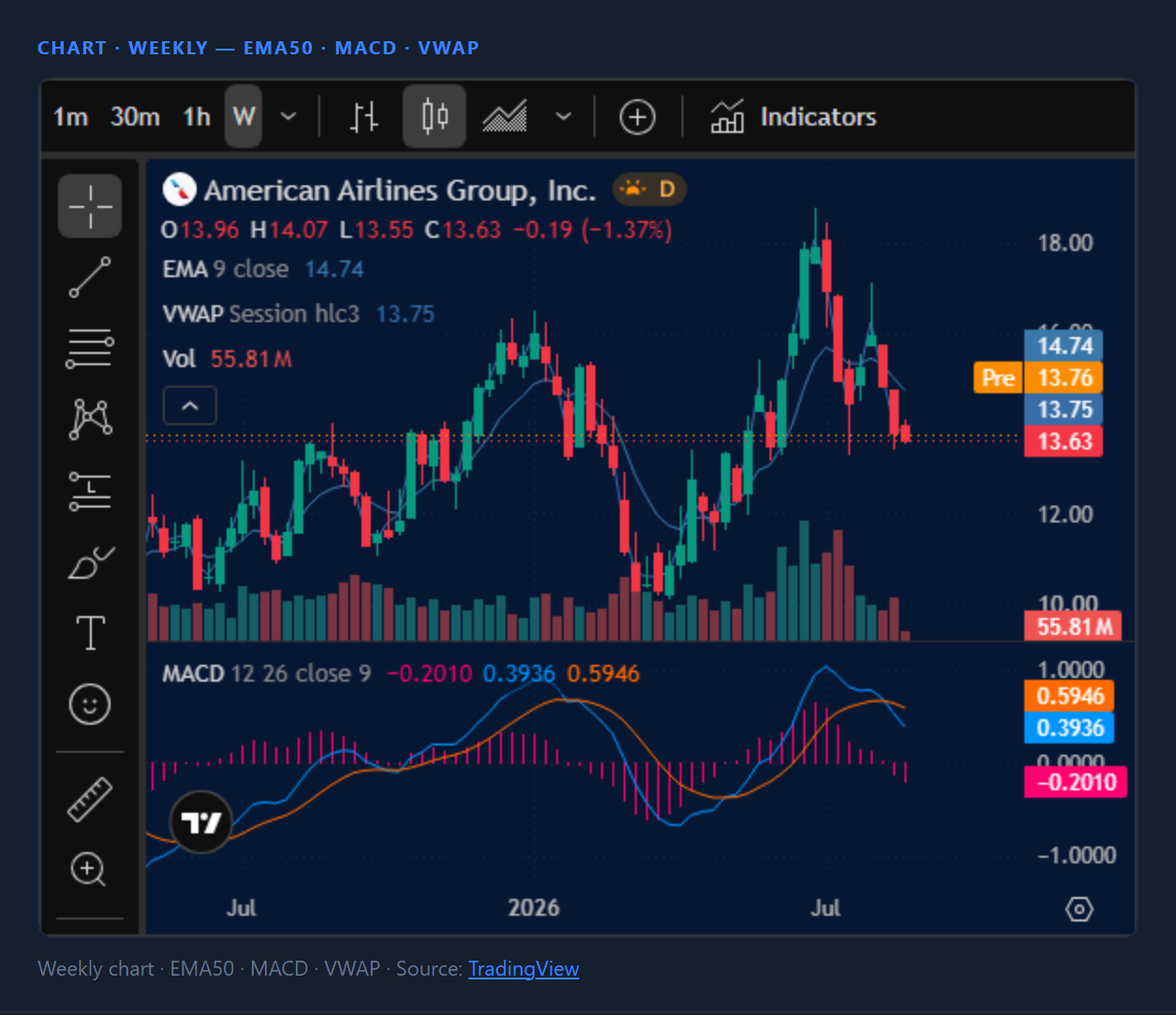
Weekly chart with 50-period moving average, MACD and VWAP. It's a TradingView widget: for some assets it might not be available. It's the last block visible to everyone: right below you'll find the "How to read this page" link; from here on the analysis is reserved for Platinum clients.
Section reserved for Platinum clients
Block 5
Rank position
Where the stock sits in the sell ranking.
★ Platinum
Real example — A2A

The stock's position among those with the same signal and market. Note: on sell signals the ranking is ordered by IQS (not by Strength, which is the ordering key on buys). It remains a reading ranking, not a guarantee.
Block 6
Sector context
How the stock's home sector is doing.
★ Platinum
Real example — A2A
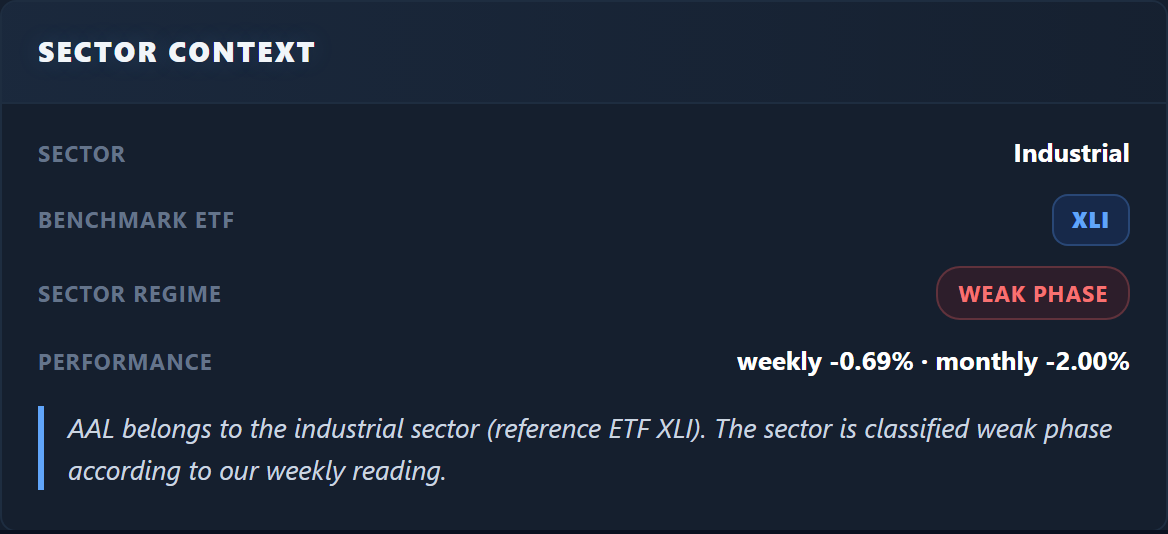
It shows how the stock's reference sector is moving (via the sector ETF): its phase and recent performance. It's background context to frame the stock — not a filter that changes the signal.
Block 7
Confirmation week
The check on the week after the signal.
★ Platinum
Real example — A2A

In the model a signal is re-checked one week after it starts: the card says whether it was confirmed or it weakened. You find it in every post; on declines already underway it records that outcome and tells how it has progressed.
Block 8 · conditional
Setup quality band
Appears only when the model advises against opening due to high risk.
When present★ Platinum
Real example — A2A
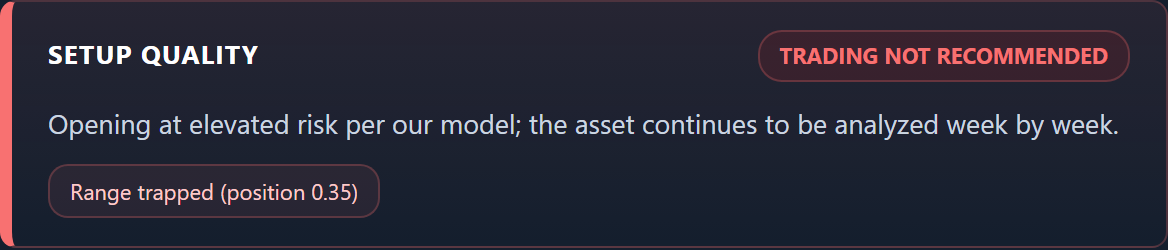
It expresses the setup grade at opening. It appears only when the model judges the entry to be high-risk: in that case it shows the "Trading not recommended" pill with the structural alerts behind it — here "Above weekly EMA200 +11%": the stock is far from a bearish pattern, so a new short is less safe. The asset keeps being analysed every week.
Worth knowing — on declines there is no "Active trade management" card (that's only for bullish trades). And this band isn't always there: if the entry isn't judged high-risk, the block is not shown.
Block 9
Price Action
The "naked" reading of the price over the last four weeks.
★ Platinum
Real example — A2A
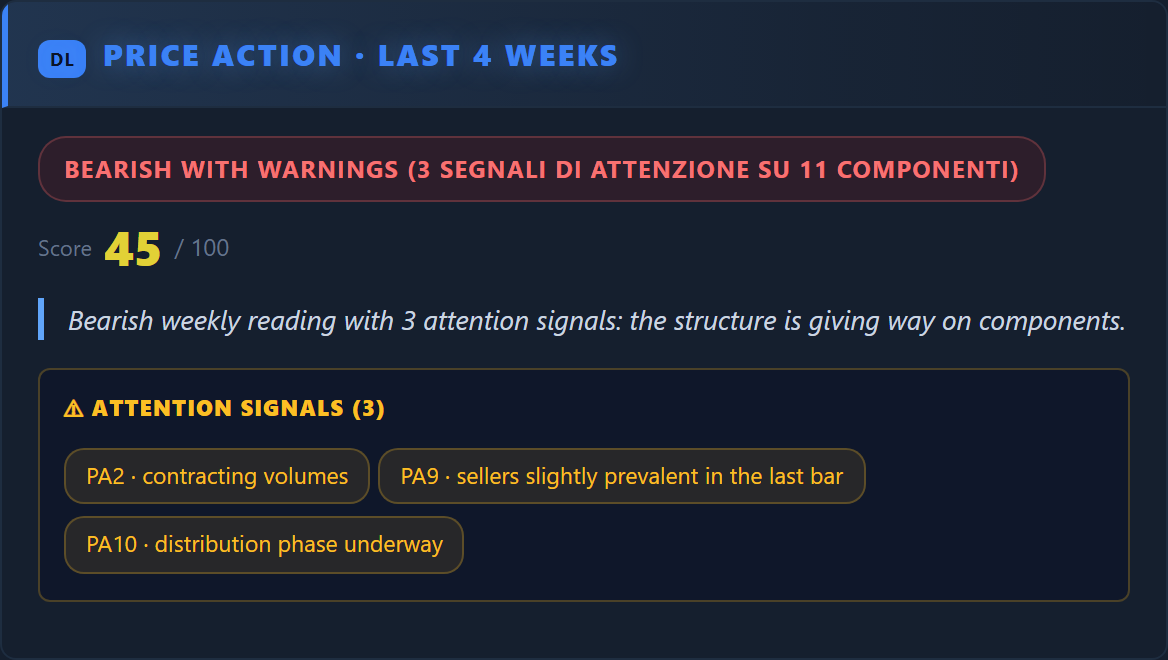
What the price is doing over the last four weeks, regardless of indicators: direction, any patterns, the strength of the move (with a summary score) and warning signs. The snapshot of recent behaviour.
Blocks 10-13
The proprietary indicators
Four measures from our model, one per card.
★ Platinum
IQS · Setup phase
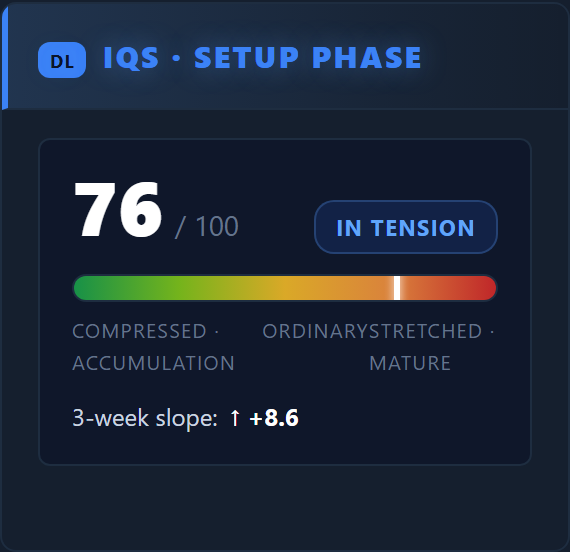
A phase descriptor of the setup relative to the volatility norm (compressed → stretched/mature). Descriptive, not predictive. On declines it's also the ranking's ordering key.
Signal Strength
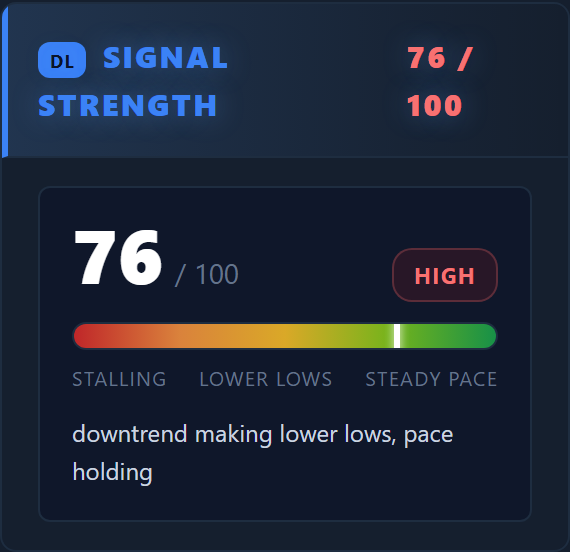
On declines the other way around: high value = a very strong drop, possible exhaustion rather than continuation. A low value indicates a more contained or undecided decline.
No-Trade Zone
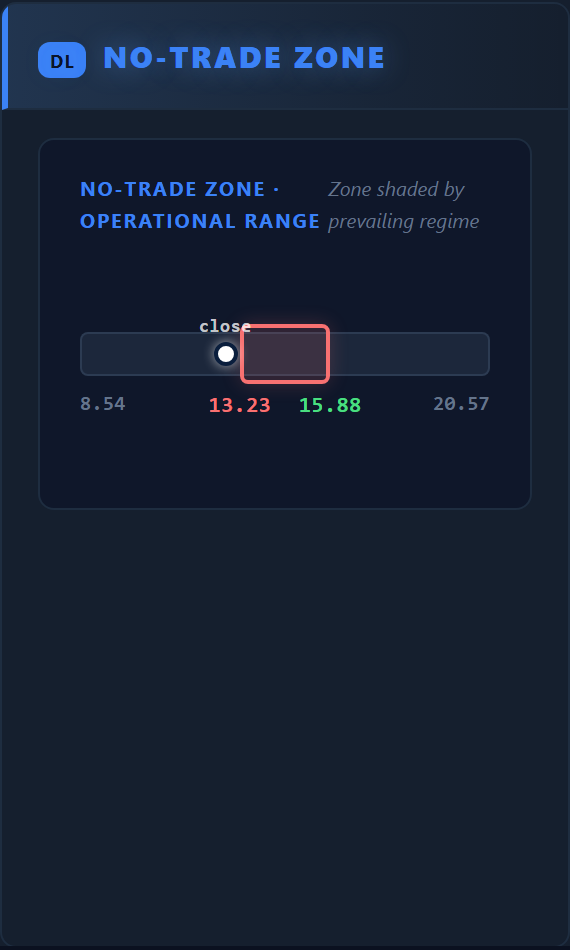
A band around the Inversion Point where entry is not operational; on an operational decline the entry is valid below the lower extreme. The dot indicates the side of the regime (not the price), without a value.
Distance from all-time highs
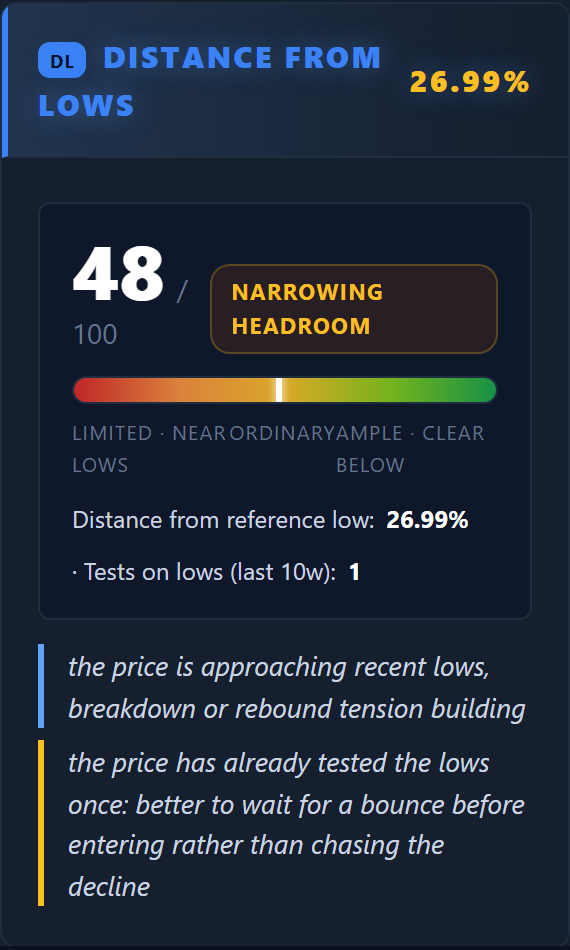
How much margin there is between the price and the all-time highs: wide margin = more room; narrow margin = close to the highs.
Support & Resistance
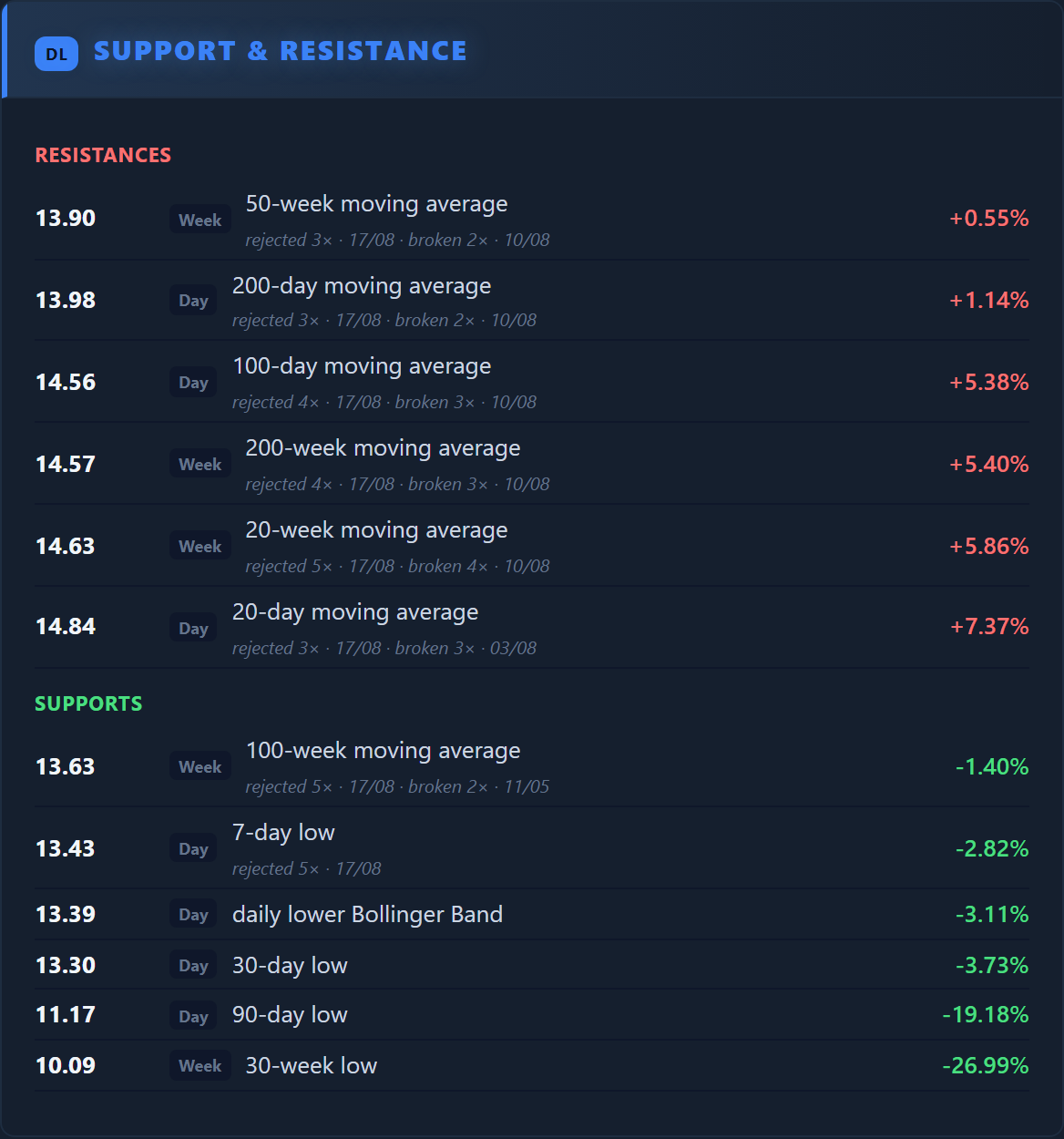
The levels the price meets above (resistances) and below (supports): for each one the price, the timeframe it comes from (Day or Week), what it is — a moving average, the Ichimoku cloud, an all-time high — and its distance from price. The «rejected N×» or «broken N×» note says how many times that level has been tested, and when last: a level rejected several times is sturdier than one never tested.
Block 14
Operational plan
The plain-words summary of the week's setup.
★ Platinum
Real example — A2A
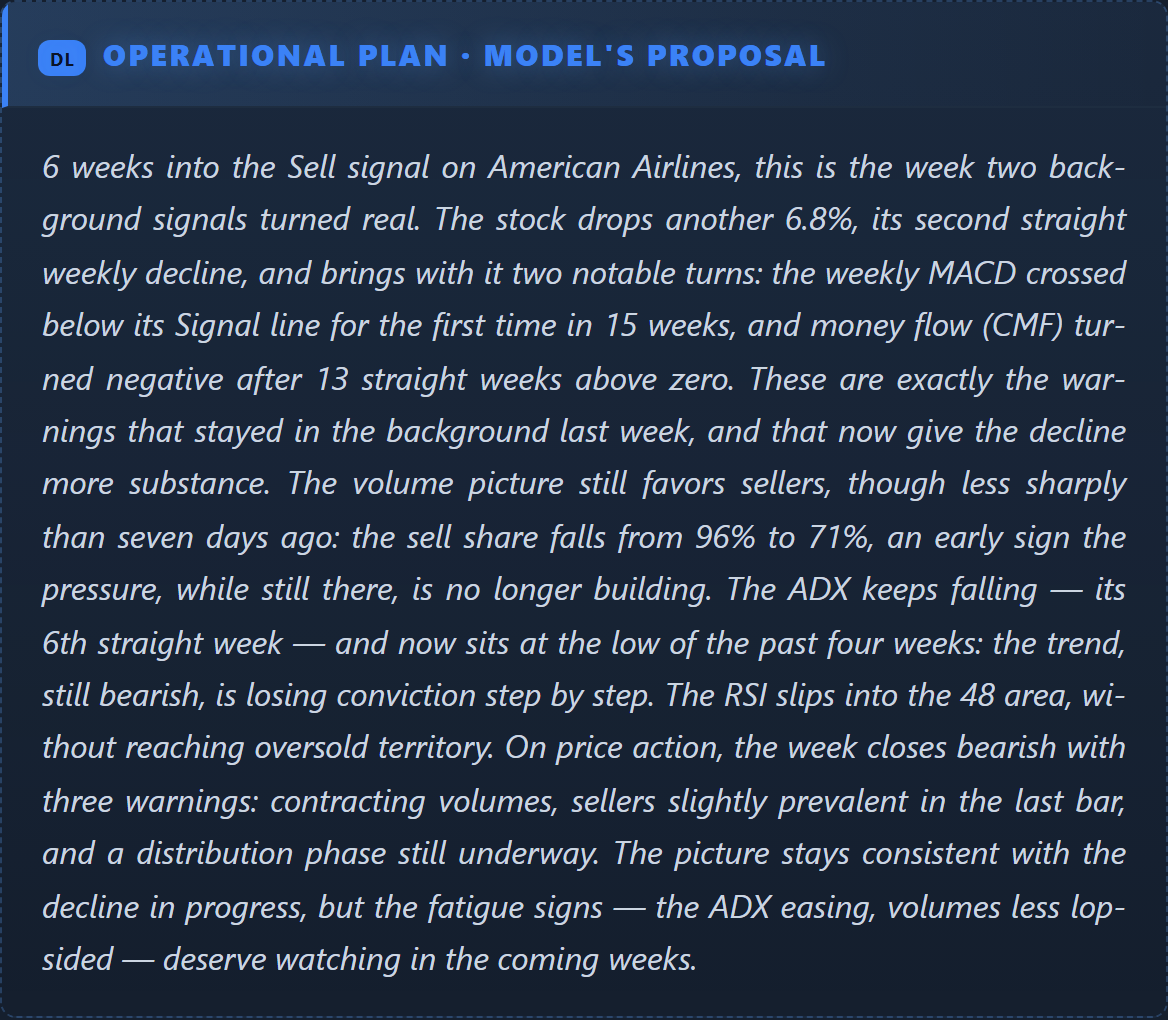
How the model hypothesises tackling the stock during the week, told in words. A working hypothesis, not instructions.
Block 15
Operational levels
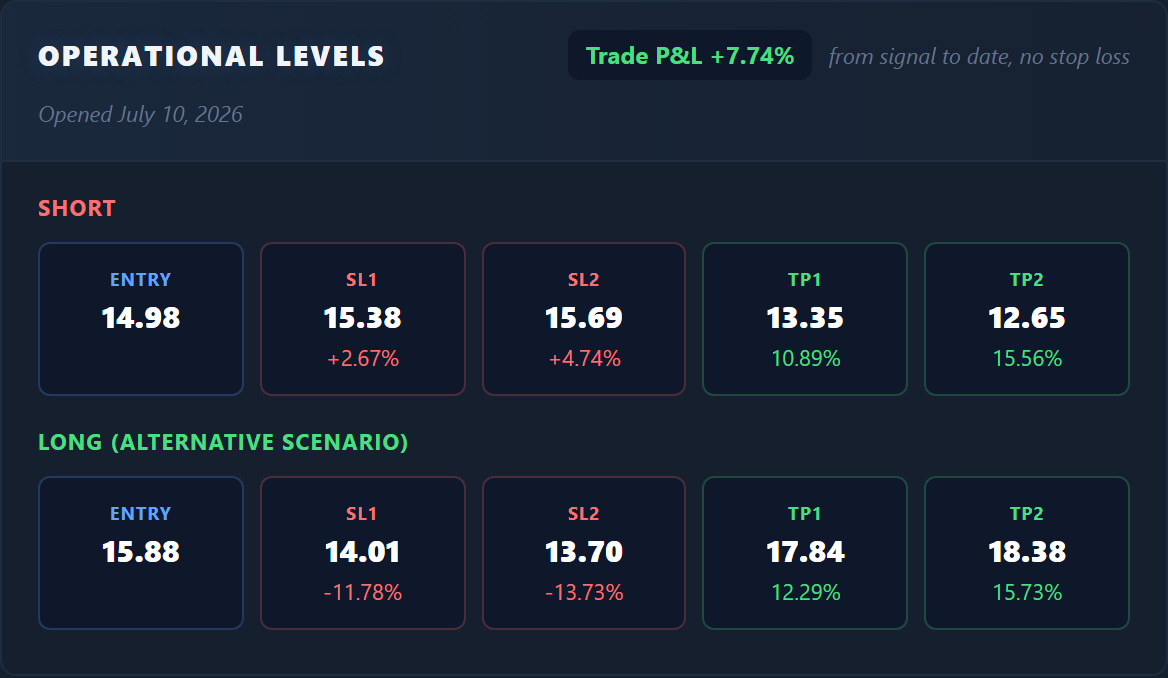
The trade's numeric grid — here with the SHORT as the primary scenario.
★ Platinum
Real example — A2A
 1
2
1
2
1SHORT (primary)
On sell posts the SHORT grid is the main one: Entry, SL1/SL2 protection (above entry) and the TPs downward. Stops are options, not instructions: it is up to you whether to use one, which one, or none. If price closes the week beyond one of the stops flagged in the previous card we call it out in the summary and in the trading plan, along with the result anyone following that level would have taken (only weekly closes count, not an intraweek touch). The model itself does not close the trade: it keeps tracking the stock until the signal eventually reverses.
2LONG (alternative scenario)
Below, the LONG scenario: it's service information (the levels if the price were to reverse upward), not the operational scenario. (On upside posts the hierarchy is the opposite: LONG primary, SHORT alternative.)
Important — these are model levels, not orders to execute. The operation is yours and at your own risk.
Block 16
Previous analyses
The history of the same stock.
★ Platinum
Real example — A2A
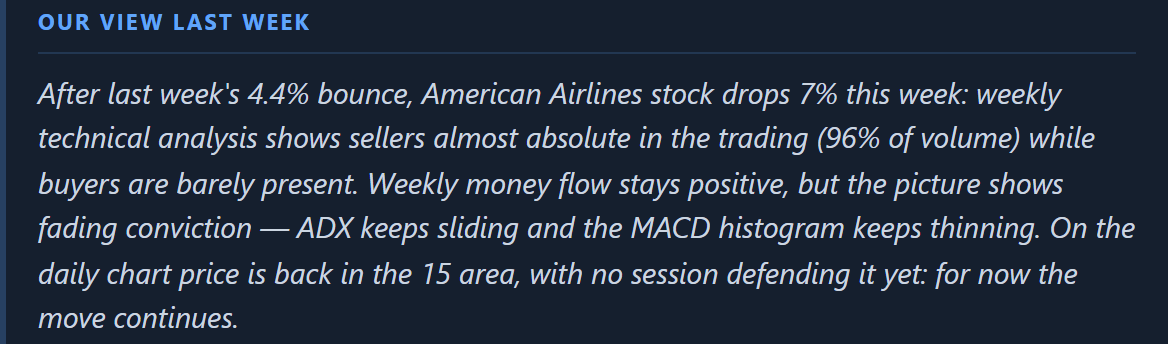
The links to previous analyses of the same stock (the ticker's history), in the language you're reading: to frame the signal over time. If there aren't any yet, you'll find the link to the stock's page.
Block 17
Legend
The glossary of the page's terms.
★ Platinum
Real example — A2A

It explains the page's terms in full. Here you'll also find the "How to read this page" link to come back to this guide.